International Center of Photography, 2026
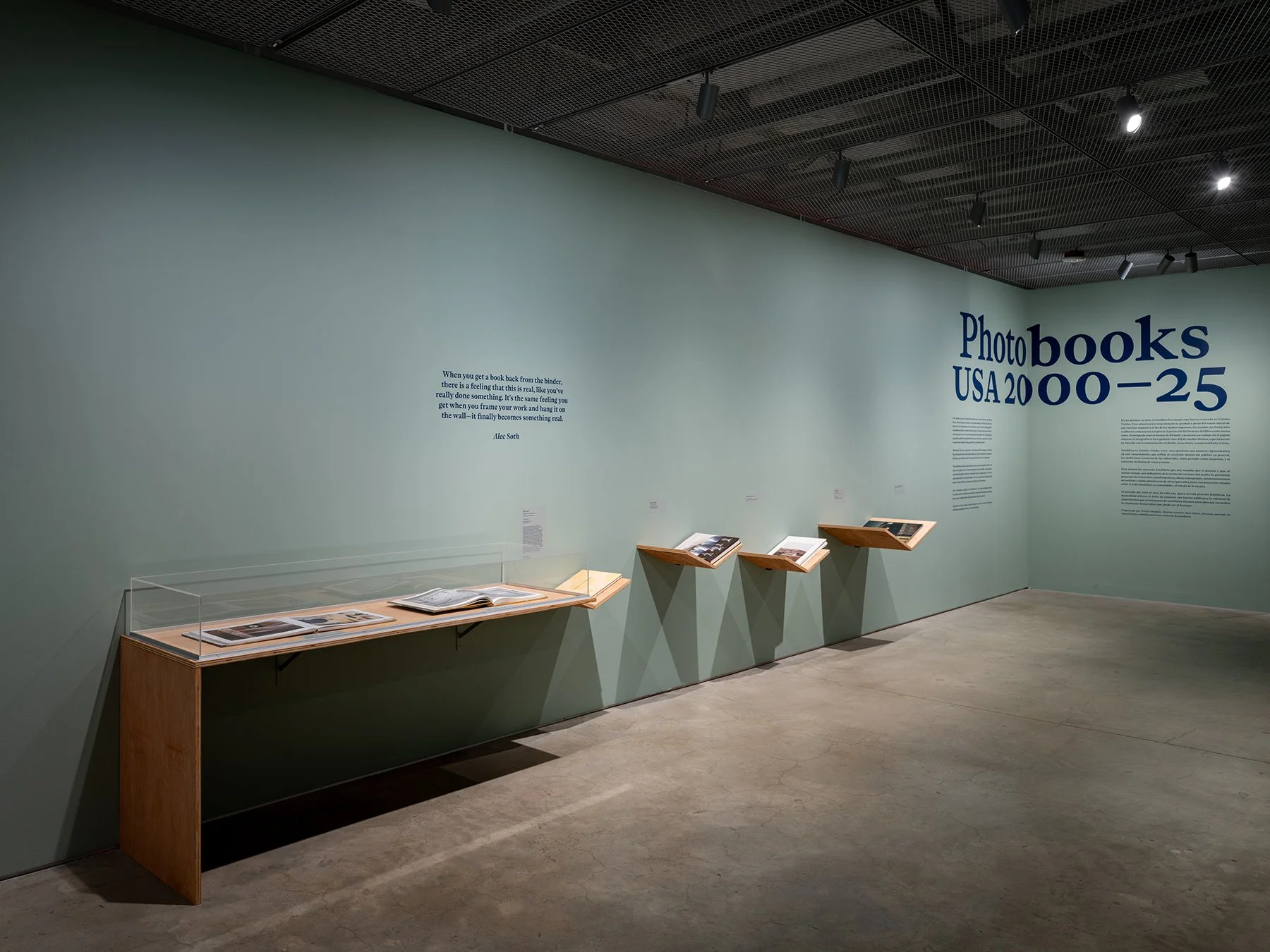
Photobooks USA 2000–25 explores how the photobook has emerged as a powerful tool for artists to respond to the forces shaping contemporary life in the United States. Over the past 25 years, this evolution is reflected in the growing number of publications, a wider range of publishers, bold experimentation in design, and greater inclusivity.
Featuring over 50 photobooks—from out-of-print titles to more recent landmark publications—the exhibition presents a cross section of creators, themes, forms, and subjects, examining how artists have used the photobook to present and circulate their work in powerful and innovative ways.
Curator: Sara Ickow, David Campany, malaika newsome
Graphic Designer: Yeliz Secerli
Jewish Museum, 2024
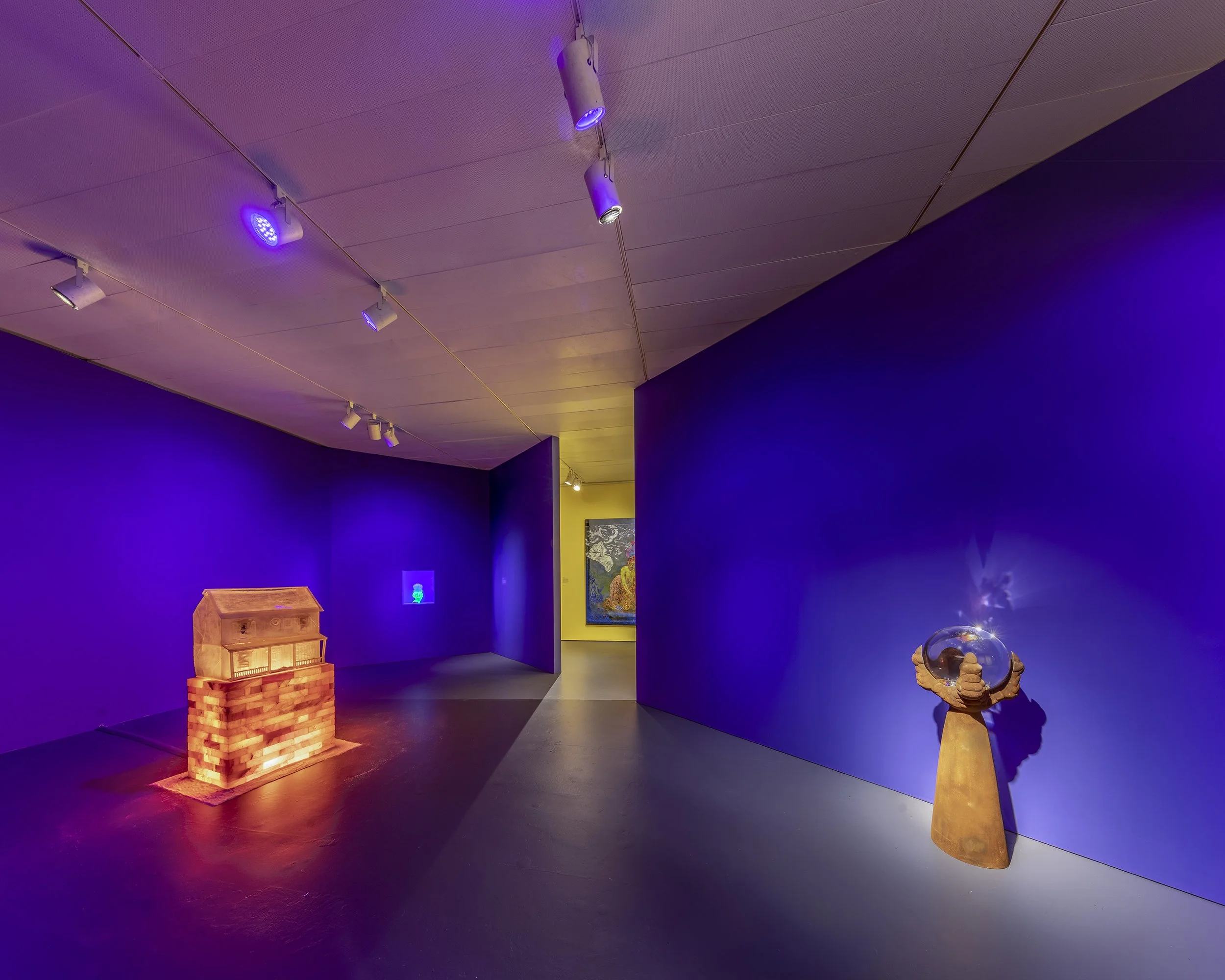
Overflow, Afterglow brought together seven young artists who use color to distort the figure and expand cultural norms—whether nodding to pop culture and digital immersion, the vibrancies of their heritages, or spaces of youthful and queer liberation. Responding to the social and political turmoil of the past decade and absorbing input from different backgrounds and histories, these artists articulate new visual vocabularies.
Curator: Liz Munsell
Graphic Designer: Ken Meier
Museum of Fine Arts, Boston, 2016
#techstyle explores how the synergy between fashion and technology is not only changing the way designers design, but also the way people interact with their clothing. The exhibition draws on the MFA’s collection of contemporary fashion and accessories, and features key pieces from innovators in the field including a digitally-printed dress from Alexander McQueen’s Plato’s Atlantis collection (Spring/Summer 2010/2011) and Iris van Herpen’s 3-D printed dress (2013) produced in collaboration with MIT designer and assistant professor Neri Oxman. Special commissions include work by CuteCircuit, Hussein Chalayan, Kate Goldsworthy, and Somerville-based Nervous System.
We wanted to create a singular setting for fashion and technology, adding in the elements of fantasy and extravagance from the fashion sphere, which, in their own form, are native to technological explorations.
Curator: Pamela Parmal, Michelle Finamore, Lauren Whitley
Graphic Designer: Nick Pioggia
Exhibition video by Jared Medeiros
Jewish Museum, 2026
Modernity and Opulence: Women of the Wiener Werkstätte sheds new light on the role that Jewish women played as artists, designers, patrons, and tastemakers shaping modernist aesthetics in early 20th-century Vienna and beyond.
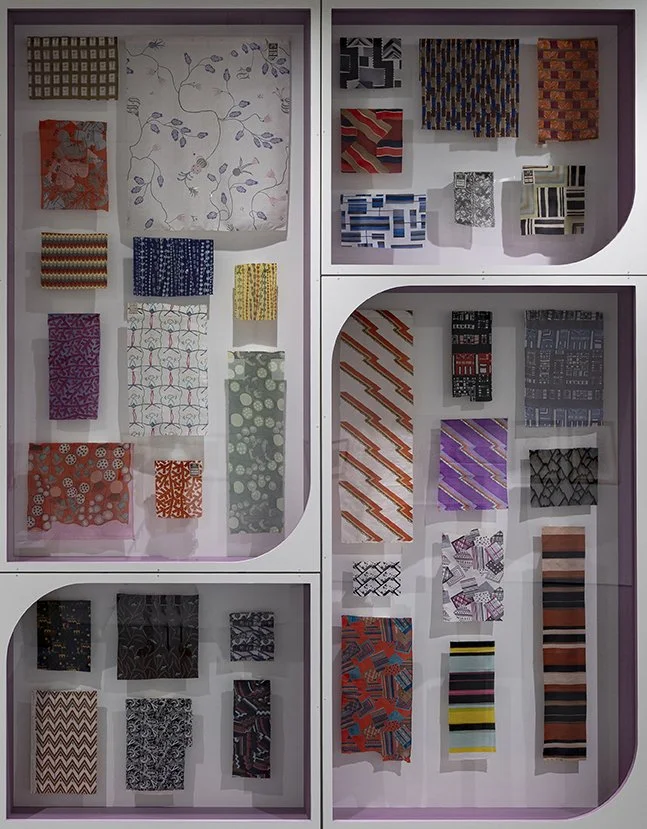
With more than 200 objects by some 30 Jewish women artists on view, the exhibition is organized thematically to reveal the extraordinary range and technical prowess of the women of the Wiener Werkstätte across mediums. A special emphasis is placed on Vally Wieselthier and Felice Rix-Ueno, whose prolific work, in ceramics and textile design respectively, has had lasting influence on these disciplines. The exhibition also provides a meaningful reintroduction to the work of artists whose work is less well-known today, and a platform for exploring their impact in the context of art and design histories.
Curator: Kristina Parsons
Graphic Designer: June Yoon
Museum of Fine Arts, Boston, 2019
With Gender Bending Fashion, we explore the role of gender and fashion, by connecting the past and the present, highlighting the work of trailblazing designers and wearers of fashion, and creating an immersive experience worthy of these compelling garments.
We were intent on creating a celebratory setting, engaging retrofuturism as a visual theme to connect the current moment to historical precedents and the imaginative exuberance of what the future could be.
Curator: Michelle Finamore
Graphic Designer: Eben Haines
Photos by Michael Blanchard
Video by Jared Medeiros
Museum of Fine Arts, Boston, 2019
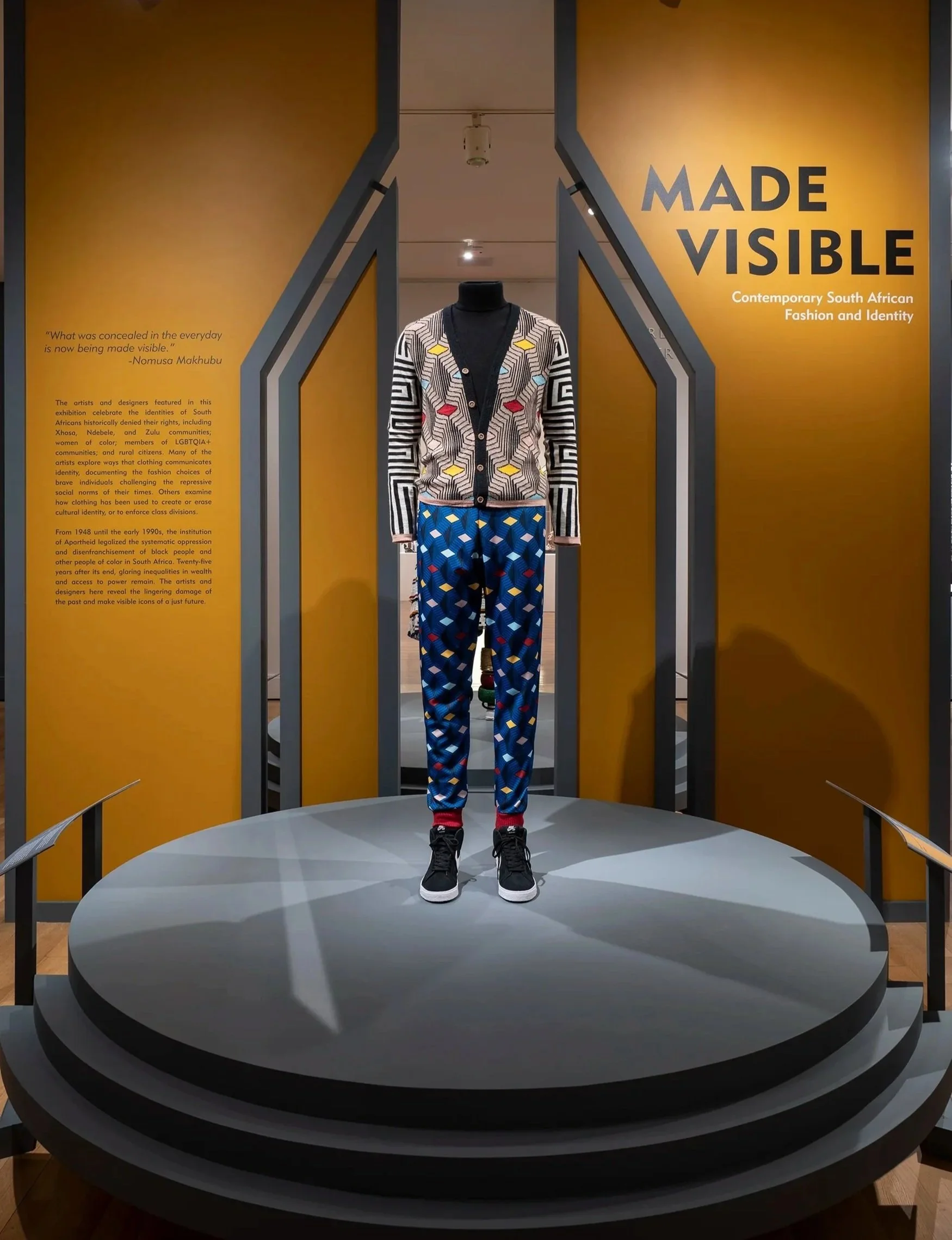
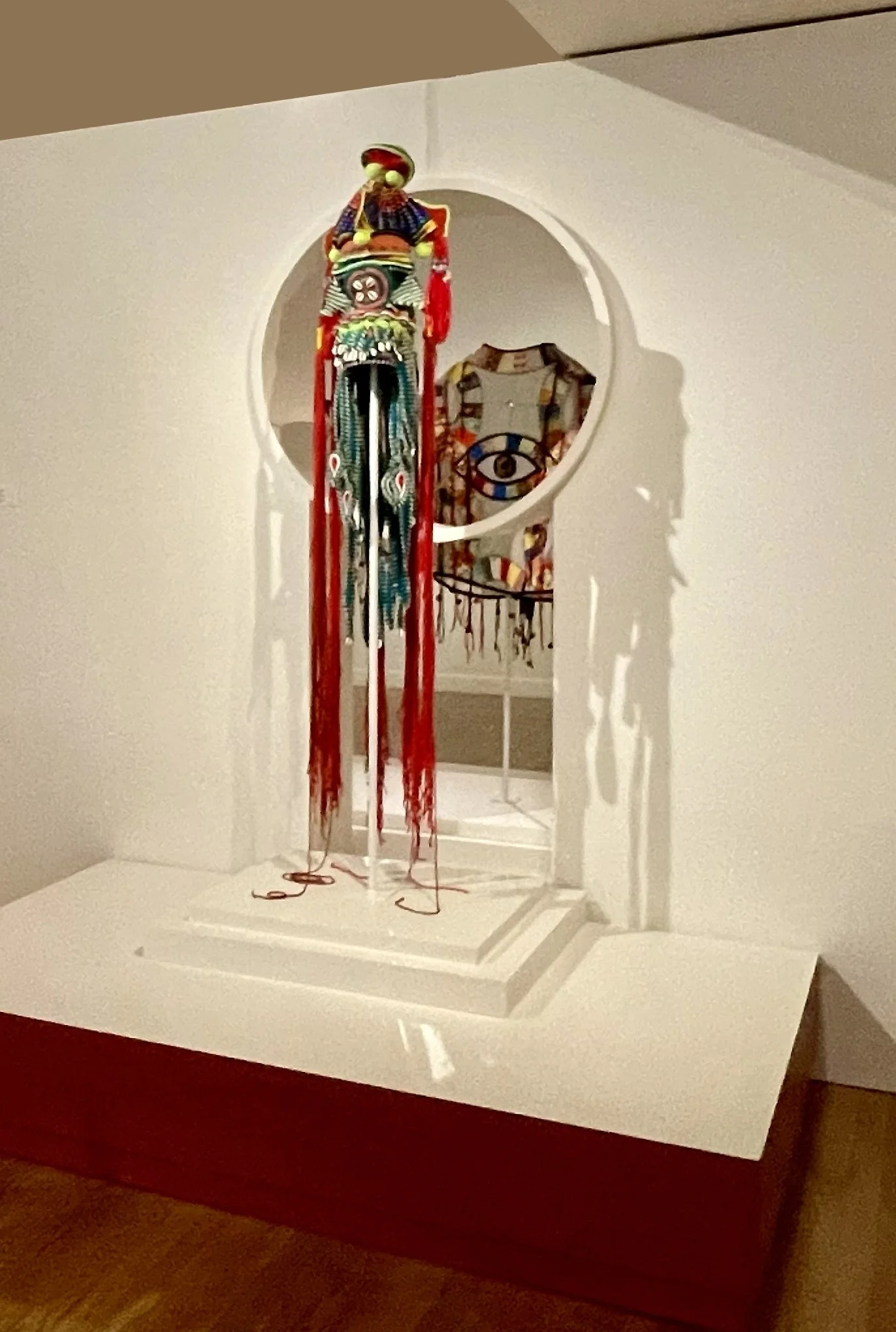
“Made Visible: Contemporary South African Fashion and Identity” celebrates the identities of South Africans historically denied their rights: Xhosa, Ndebele, and Zulu communities; women of color; members of the LGBTQI community; and rural citizens, among others. Many of the artists featured in the exhibition explore the way that clothing communicates identity, documenting the fashion choices of brave individuals challenging the social norms of their times. Others examine how clothing has been used to create or erase cultural identity, or to enforce class divisions.
The design references the graphically striking painted houses of the Ndebele people of South Africa. This same graphic treatment features in the beadwork on display. The platforms take their cue from the traditional neck and leg ornaments of the Ndebele.
Curator: Kathryn Gunsch
Graphic Designer: Eben Haines
Museum of Fine Arts, Boston, 2021
To tell the story of multi-disciplinary artists who were fluent in multiple languages and art forms, the exhibition design takes up the challenge of code-switching. Basquiat was a master code-switcher, moving freely and appreciated commensurably between the realms of graffiti art and the downtown gallery scene.
Throughout the different galleries in the show, the same formal moves, colors, and materials show up remixed and reinterpreted, switching their codes in various contexts. The visitor descends into the entry space where we allude to a NYC subway platform, and, through the main doors, visitors are transported to a Chelsea art gallery, a portrait gallery, a dance club, and even an Afrofuturistic spaceship. The same fluorescent lighting, flooring, and paint colors appear in different spots throughout, shapeshifting in relationship to these different contexts.
The casework is designed to underscore the multi-disciplinary work of these artists. The work is displayed tiered in a dynamic fashion to emphasize this energetic output in all different forms from these artists.
With the barrier line in front of the paintings and the strong linear lighting elements throughout the galleries, the design underscores the vitality of the Line and writing in the artwork.
Curator: Liz Munsell
Graphic Designer: Nick Pioggia
Museum of Fine Arts, Boston, 2019
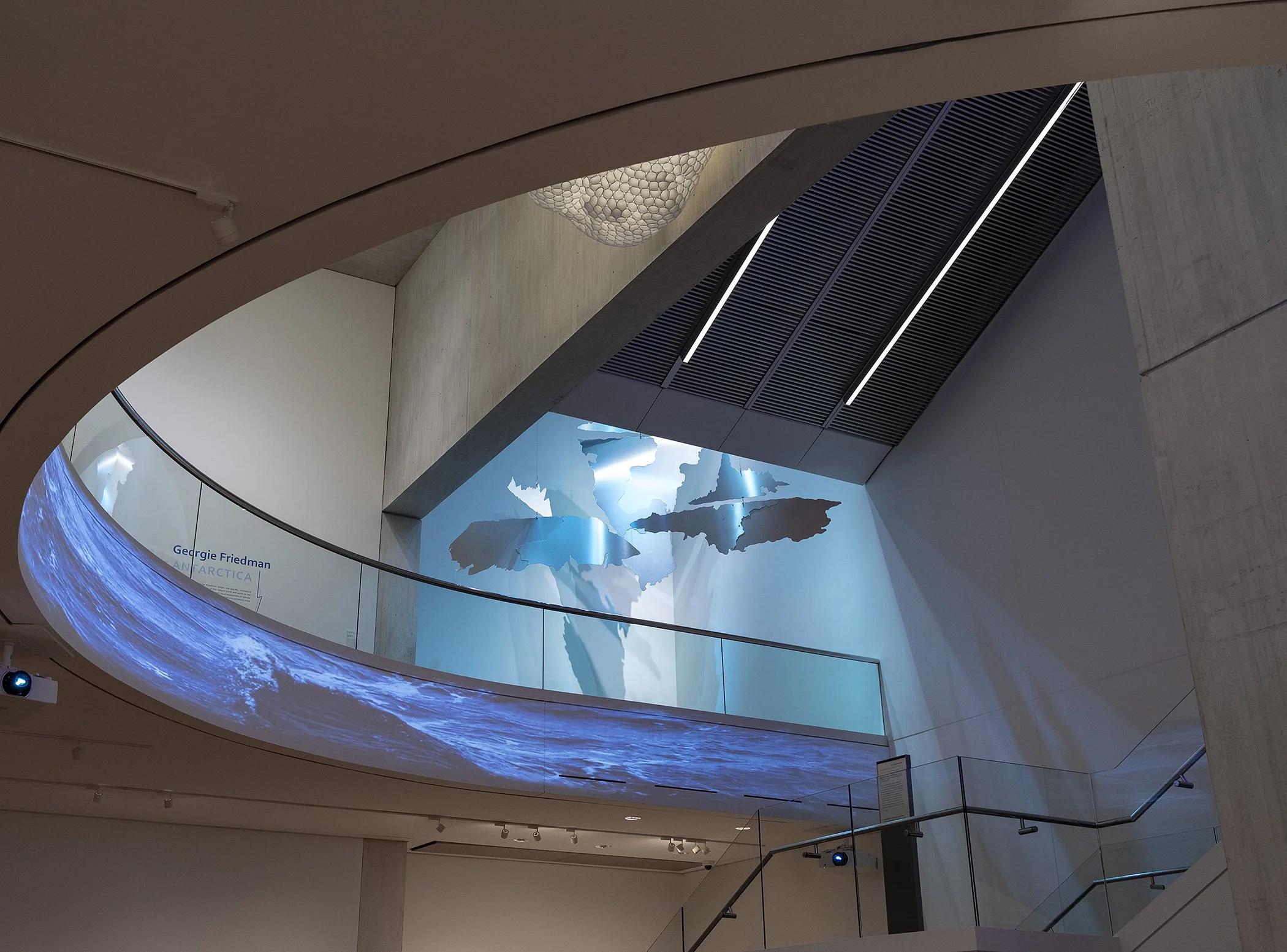
The exhibition presents fragments of a shrinking continent and raises questions about the need to document an ecology in peril. “Georgie Friedman: Fragments of Antarctica” invites visitors to reflect on their own relationship with the natural world—and consider an ice-bound landscape under threat by sweeping global changes.
Curator: Liz Munsell
Graphic Designer: Eben Haines
Schomburg Center, 2026
Since its inception, the Schomburg Center has invested in the cultural work of people of the African Diaspora. However, gender inequities exist in our collections. Curators in the Art and Artifacts and Photographs and Prints Divisions have been addressing the institutional underrepresentation of Black women artists through acquisitions of contemporary art.
Working across various media, the 21 artists featured in this exhibition engage wide-ranging themes including iconography of the Black woman’s body, storytelling, futurism, spirituality, and the mapping of Black history. These recent acquisitions acknowledge the importance of Black women artists and advance the Schomburg Center’s ability to represent, preserve, and share more dimensions of our expansive Black culture.
Curator: La Tanya S. Autry and Tammi Lawson
Graphic Designer: Yeliz Secerli and Olya Domoradova
Museum of Fine Arts, Boston, 2017
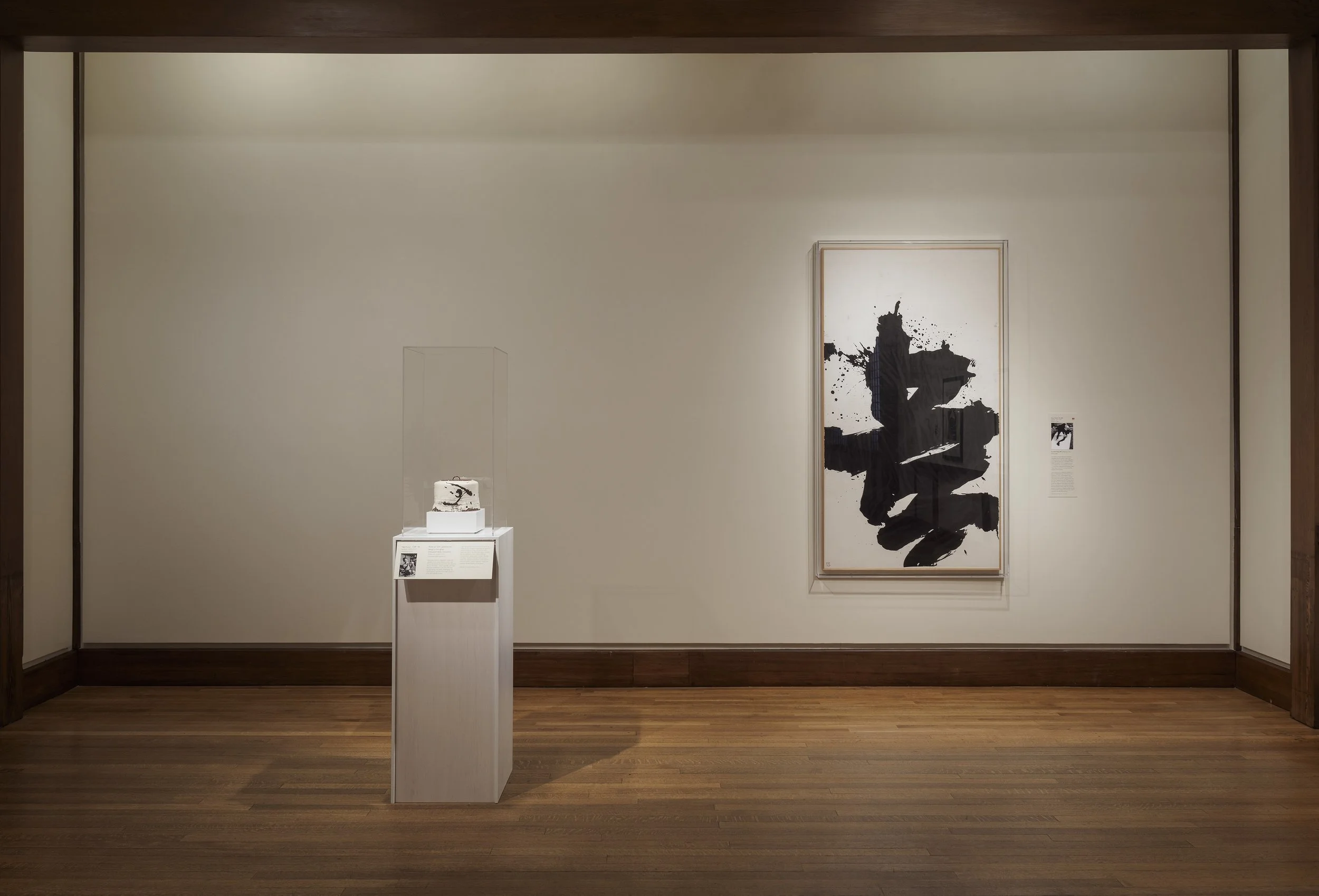
Centered around a newly acquired, large-scale calligraphy by Inoue Yūichi (1916–85), this exhibition showcased a selection of avant-garde works in the monochrome aesthetic shared widely in Japan and beyond during the postwar period. This sensibility is rooted in Zen Buddhism, which values simplicity and austerity, and remains influential today. The works in the exhibition are the results of transnational exchanges between Japanese artists like Inoue and their American Expressionist contemporaries, including Franz Kline and Jackson Pollock, who drew inspiration from Asian calligraphy for their gestural paintings.
Curator: Anne Nishimura Morse
Graphic Designer: Nick Pioggia
Museum of Fine Arts, Boston, 2016
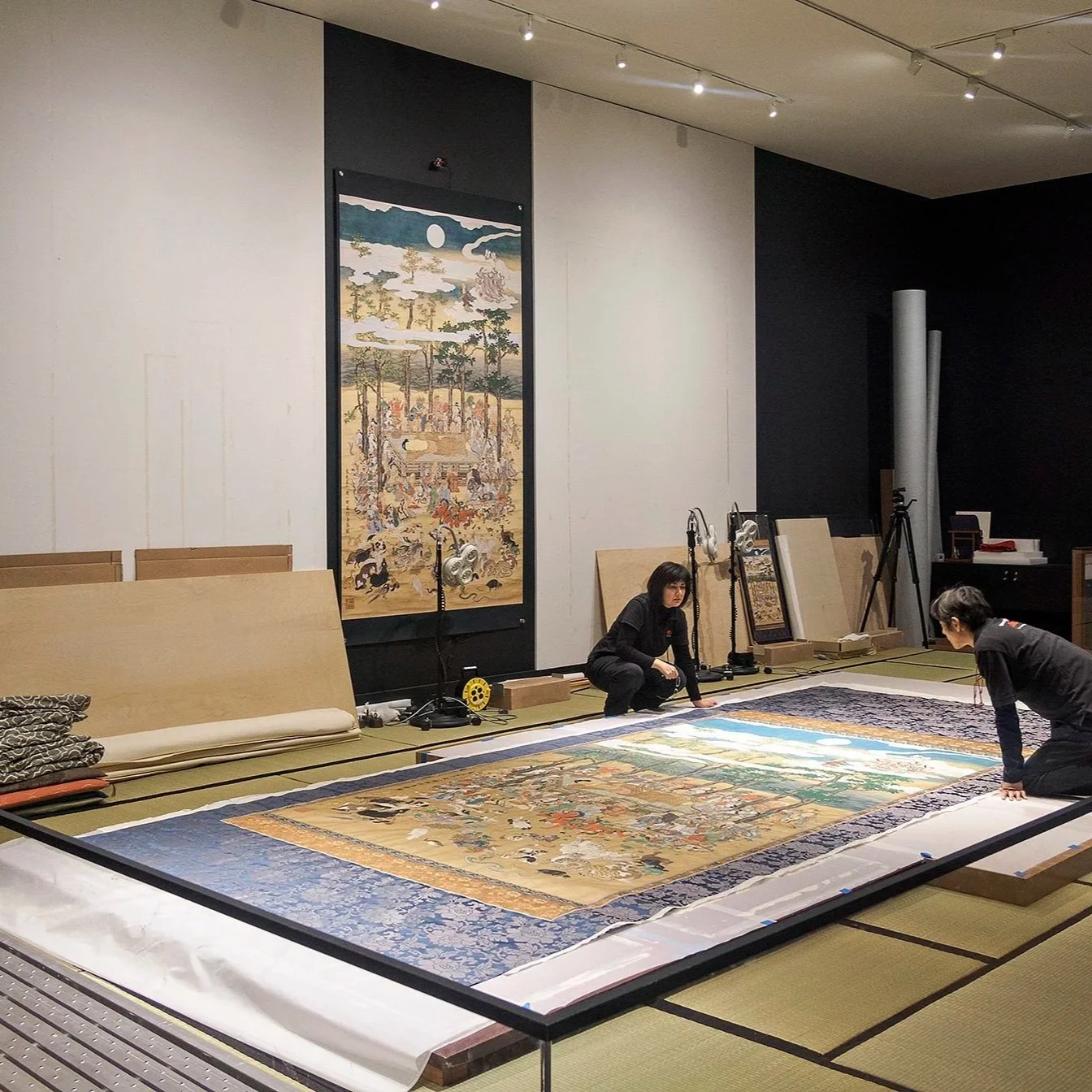
Treatment of Hanabusa Itchō’s iconic masterpiece, The Death of the Historical Buddha (Nehan zu) began in the spring of 2016 behind closed doors. In August 2016, the Japanese hanging scroll, last treated and remounted in the 1850s, moved into gallery 178, allowing the public to observe and interact with conservators as treatment continued. This rare 16-foot-tall masterpiece of the Edo period, which had not been on view in more than 25 years, is one of the most important Buddhist paintings of its time. In partnership with colleagues from the Smithsonian’s Freer Gallery of Art, this project gave the conservation team an opportunity to engage with visitors in the gallery and field questions as they work on the painting.
Conservation: MFA Boston Japanese Painting Conservation team led by Jacki Elgar with additional curation by Sarah Thompson
Graphic designer: Jennifer Liston Munson
Museum of Fine Arts, Boston, 2017
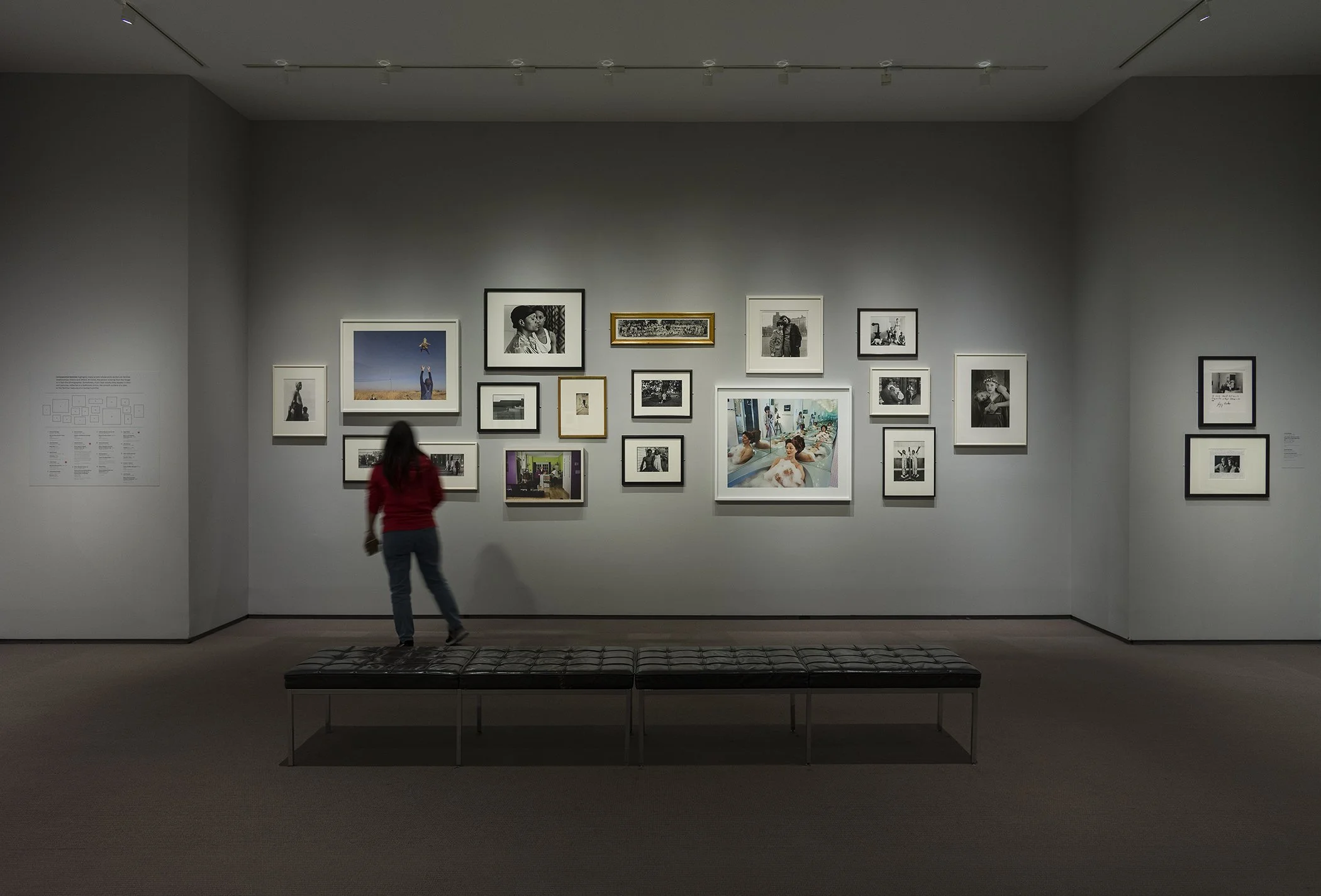
Bringing together more than 80 pictures taken by American photographers from the 19th century to today, “(un)expected families” explored the definition of the American family—from the families we are born into to the ones we have chosen for ourselves. The works on view depict a wide range of relationships, including multiple generations, romantic unions, and alternative family structures. Using archival, vernacular, and fine art photographs, “(un)expected families” offers a variety of perspectives on the American family, from Dorothea Lange’s depiction of a migrant family at the time of the Dust Bowl to Louie Palu’s portraits of US Marines fighting in Afghanistan.
The exhibition illustrates that the family has always taken diverse forms: affluent and destitute, cohesive and fractured, expected and unexpected. Taken together, the photographs challenge visitors to consider what family means to them. “(un)expected families” features celebrated practitioners like Nan Goldin, Carrie Mae Weems, LaToya Ruby Frazier, and Harry Callahan, as well as a number of renowned Boston-area artists, such as David Hilliard, Nicholas Nixon, Abe Morell, and Sage Sohier.
Curator: Karen Haas
Graphic designer: Eben Haines
Museum of Fine Arts, Boston, 2017
Henri Matisse—who revolutionized 20th-century art—believed that a treasured group of objects was instrumental to his studio practice. “Matisse in the Studio” was the first major international exhibition to examine the importance of Matisse’s personal collection of objects, offering unprecedented insight into the great artist's creativity.
The window figured prominently in Matisse’s paintings. This architectural apparatus functioned as a way of collapsing foreground, middle ground, and background, connecting disparate objects in his domestic settings. In this show, the window allows visitors the opportunity to see the objects collaged with one another as they move throughout the exhibit. The window also affords the visitor the ability to encounter the same object from different vantage points, at different moments of the show. The viewer gets to enact the same kind of re-discovery that Matisse did with these objects throughout his life.
Curator: Helen Burnham
Graphic Designer: Nick Pioggia
Museum of Fine Arts, Boston, 2019
This exhibition of magnificent jewelry, pottery, sculpture, metalwork, and more from the MFA’s collection of ancient Nubian art examines power, representation, and cultural bias—in the ancient world, in the early 20th century, and today. Through a majestic display of art and objects, “Ancient Nubia Now” confronts past misinterpretations and offers new ways of understanding Nubia’s history and contemporary relevance.
Curator: Denise Doxey, Lawrence Berman, Rita Freed
Graphic Designer: Eben Haines
VR walkthrough made by Archimedes Digital, special thanks to Luke Hollis: https://archimedes.digital/
Museum of Fine Arts, Boston, 2019
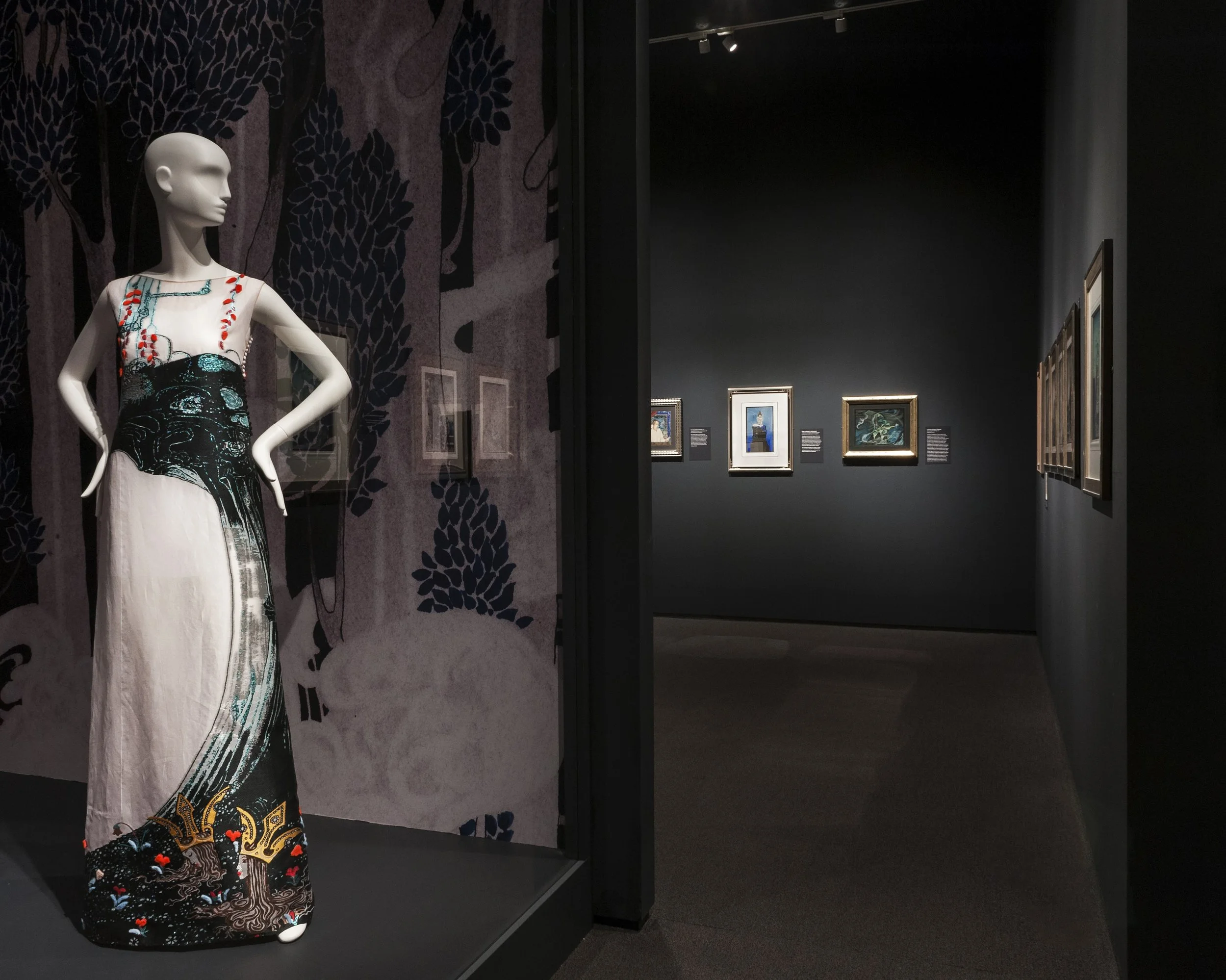
Kay Nielsen’s interpretations of classic fairy tales are among the most celebrated book illustrations of the 20th century. Showcasing more than 45 dramatic watercolors, drawings, and illustrated books from the Kendra and Allan Daniel Collection, “Kay Nielsen’s Enchanted Vision” celebrated the Danish artist’s significant achievements in illustration while highlighting some of his work in theater design and animation.
Curator: Meghan Melvin
Graphic Designer: Nick Pioggia
Museum of Fine Arts, Boston, 2017
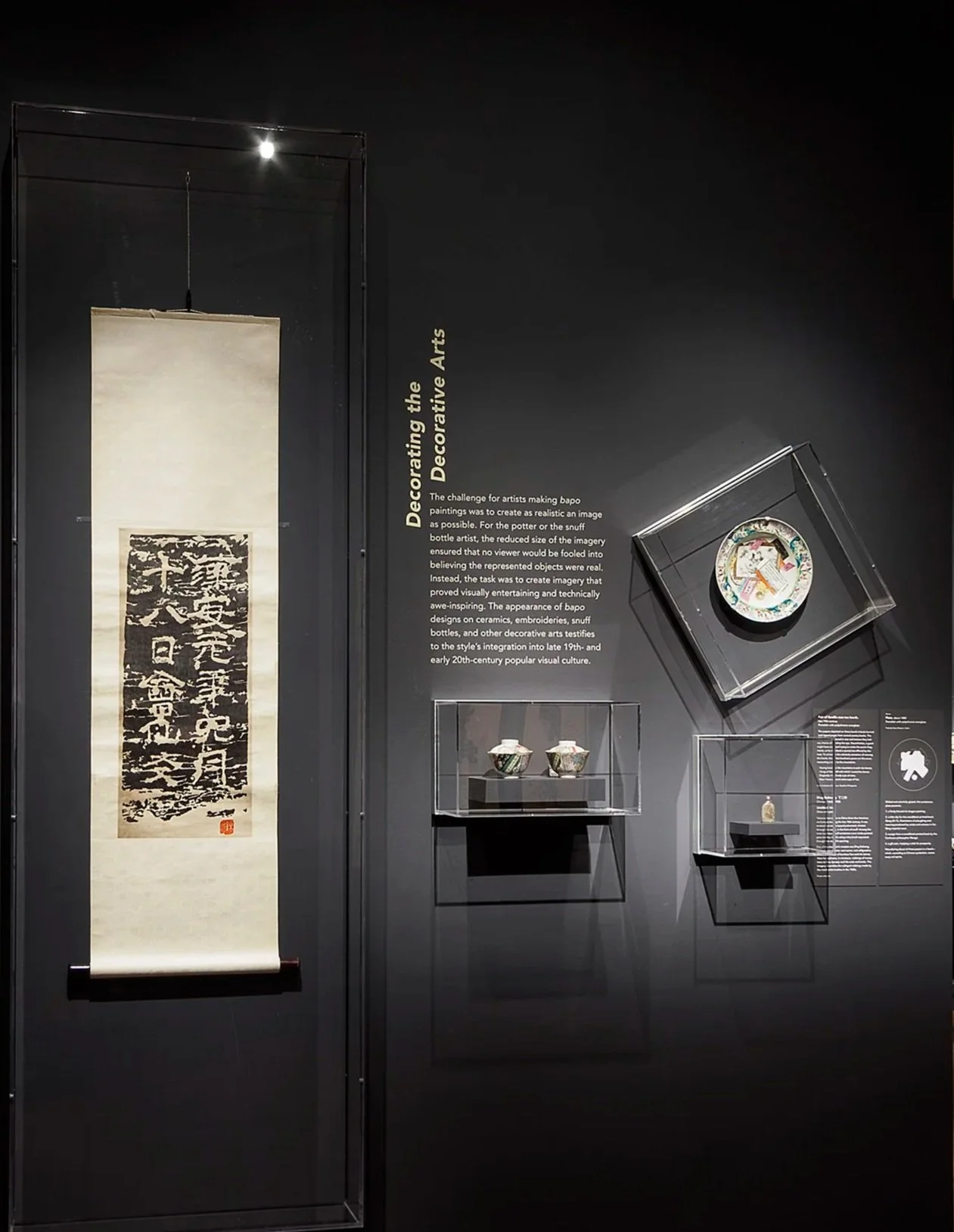
Eight is a lucky number in Chinese culture, and bapo refers to the damaged cultural ephemera hyper-realistically depicted in the paintings—worm-eaten calligraphies, partial book pages, burned paintings, remnants of rubbings and torn-open letters. They are usually arranged in a haphazard, collage-like composition, created with Chinese ink and colors on paper or silk. When bapo emerged, this unexpected imagery was radically distinct from classical Chinese landscape and figure painting, and became popular among an aspiring urban middle class delighted by its visual trickery and sophistication.
Partically-enclosing walls, broken and overlapping, allow the visitor to make connections across the gallery to different objects in the show. The show manifests the same shard-like imagery on the scrolls. One wall features an exploded diagram of the objects featured on a bapo scroll.
Curator: Nancy Berliner
Graphic Designer: Nick Pioggia
Museum of Fine Arts, Boston, 2016
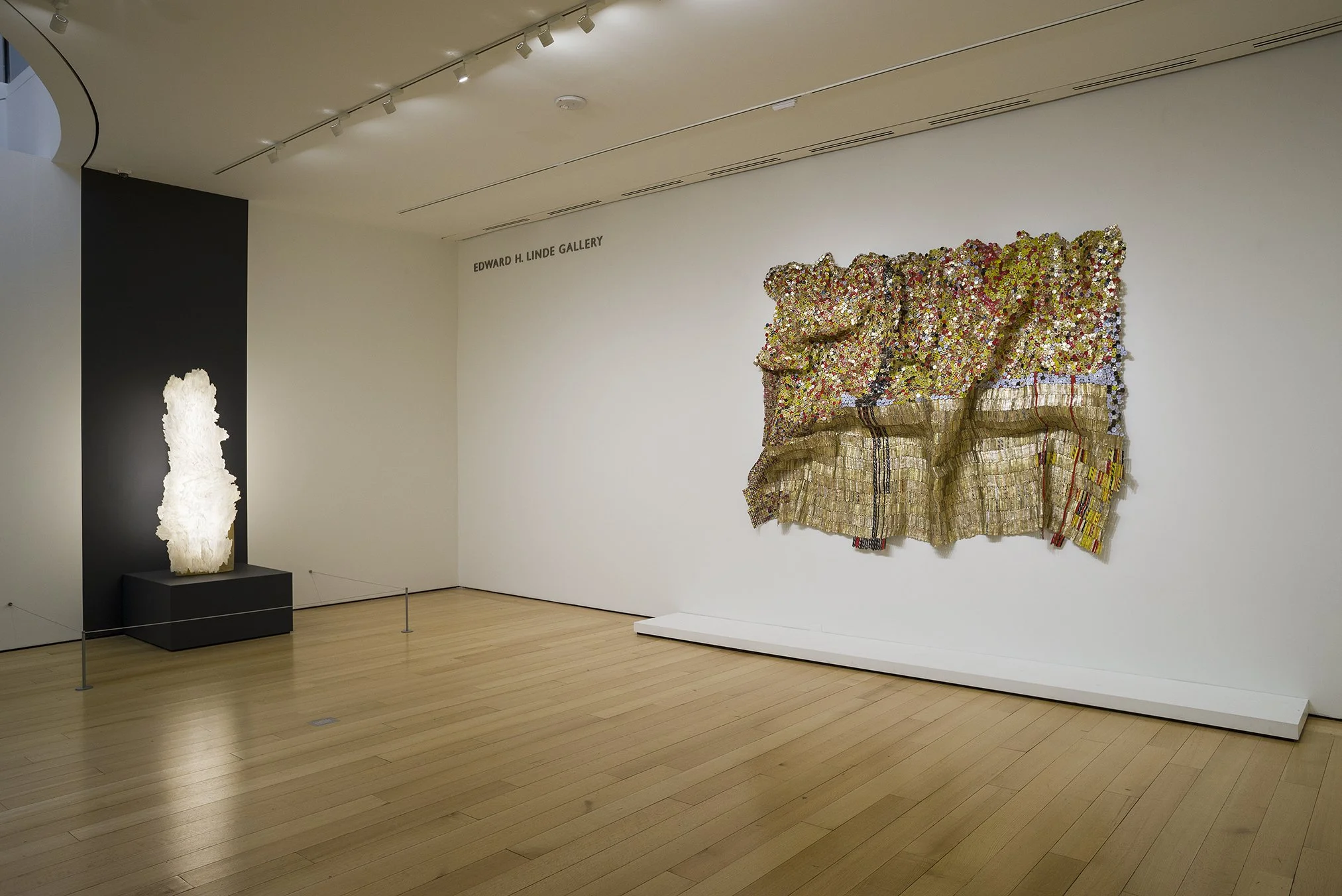
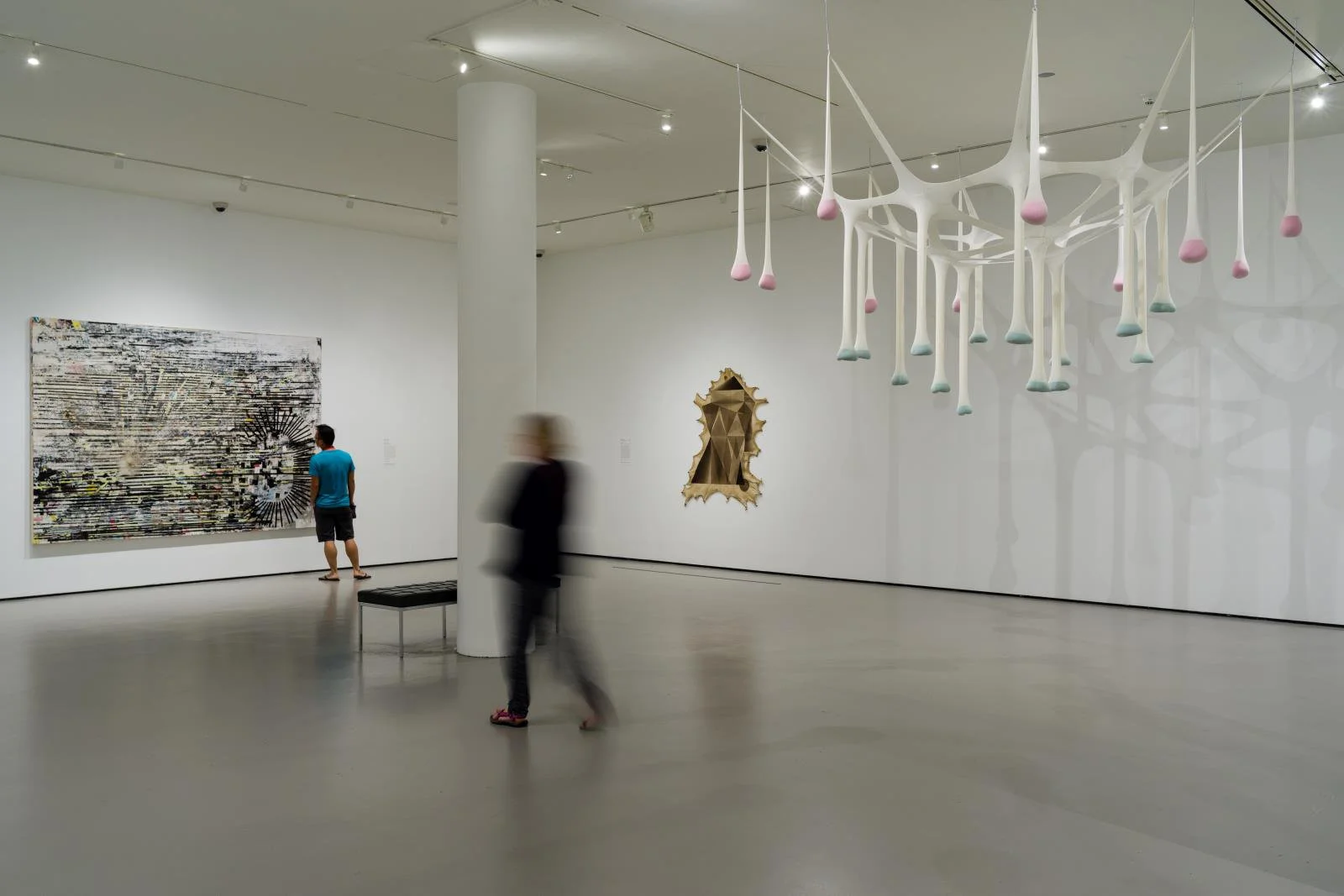
The works in “Massed Media” are all made using a similar artistic strategy: the massing of multiple components into a cohesive whole—greater than the sum of its parts. Artists have long been interested in gathering or assembling materials in unusual ways to speak about many types of issues. These include how multiplicity and abundance can transform our perception of familiar objects or the interconnectedness and complexity of systems, be they architectural, organic, or human. Whether sculpture, video, jewelry, craft, or design, the works in “Massed Media” show the power and potential of pattern.
Curator: Emily Zilber
Graphic designer: Eben Haines
Museum of Fine Arts, Boston, 2017
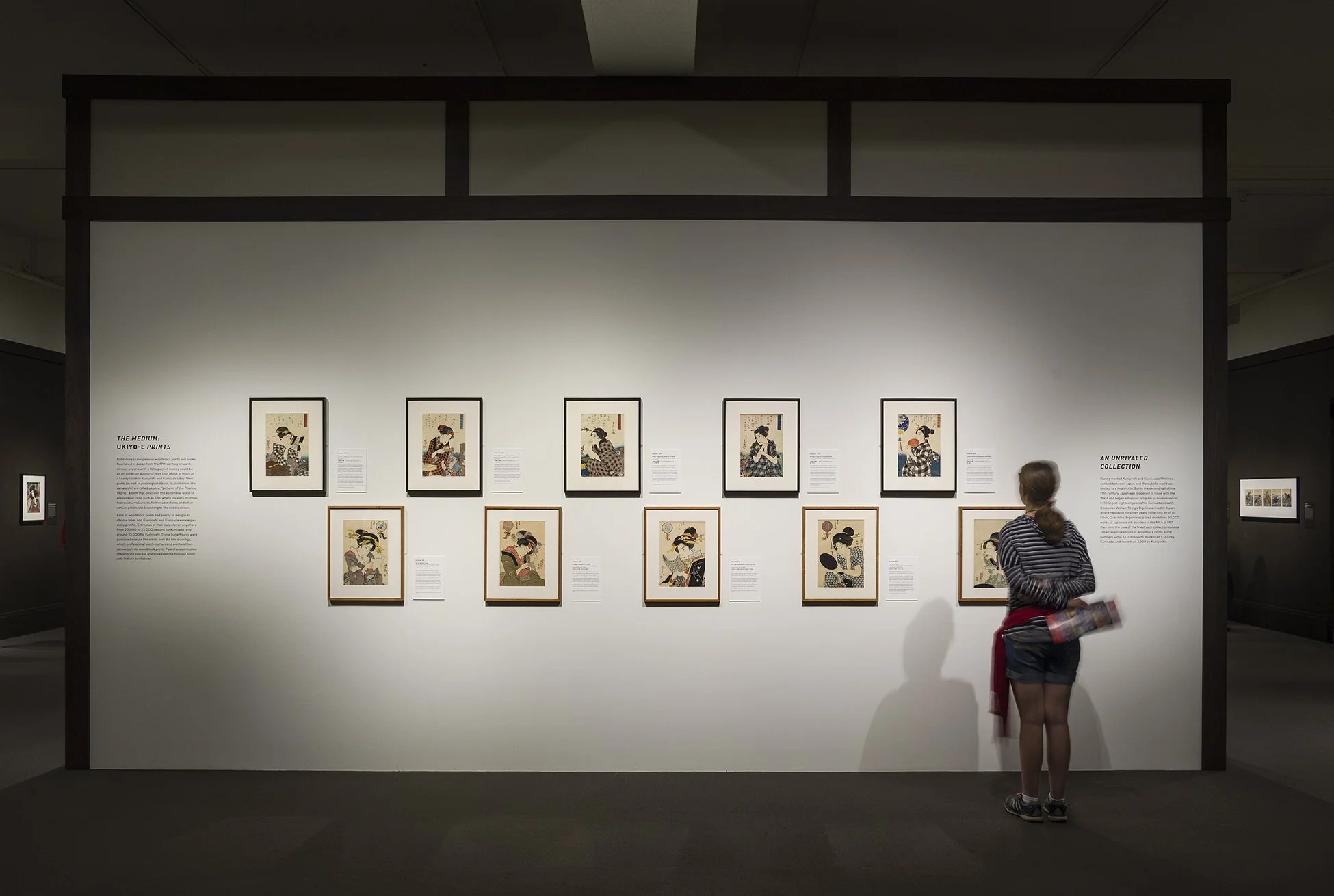
Rival artists Utagawa Kuniyoshi (1797–1861) and Utagawa Kunisada (1786–1864) were the two best-selling designers of ukiyo-e woodblock prints in 19th-century Japan. Kunisada was the popular favorite during his lifetime, famous for realistic portraits of Kabuki theater actors, sensual images of beautiful women and the luxurious settings he imagined for historical scenes. Kuniyoshi is beloved by today’s connoisseurs and collectors for his dynamic action scenes of tattooed warriors and supernatural monsters—foreshadowing present-day manga and anime—as well as comic prints and a few especially daring works that feature forbidden political satire in disguise. The exhibition presented a selection of 100 outstanding works, drawn entirely from the MFA’s preeminent Japanese collection, including large, multi-sheet images in brilliant color. Viewers are invited to decide for themselves which of the two artists is their personal favorite.
Curator: Sarah Thompson
Graphic designer: Nick Pioggia
Museum of Fine Arts, Boston, Opened 2019
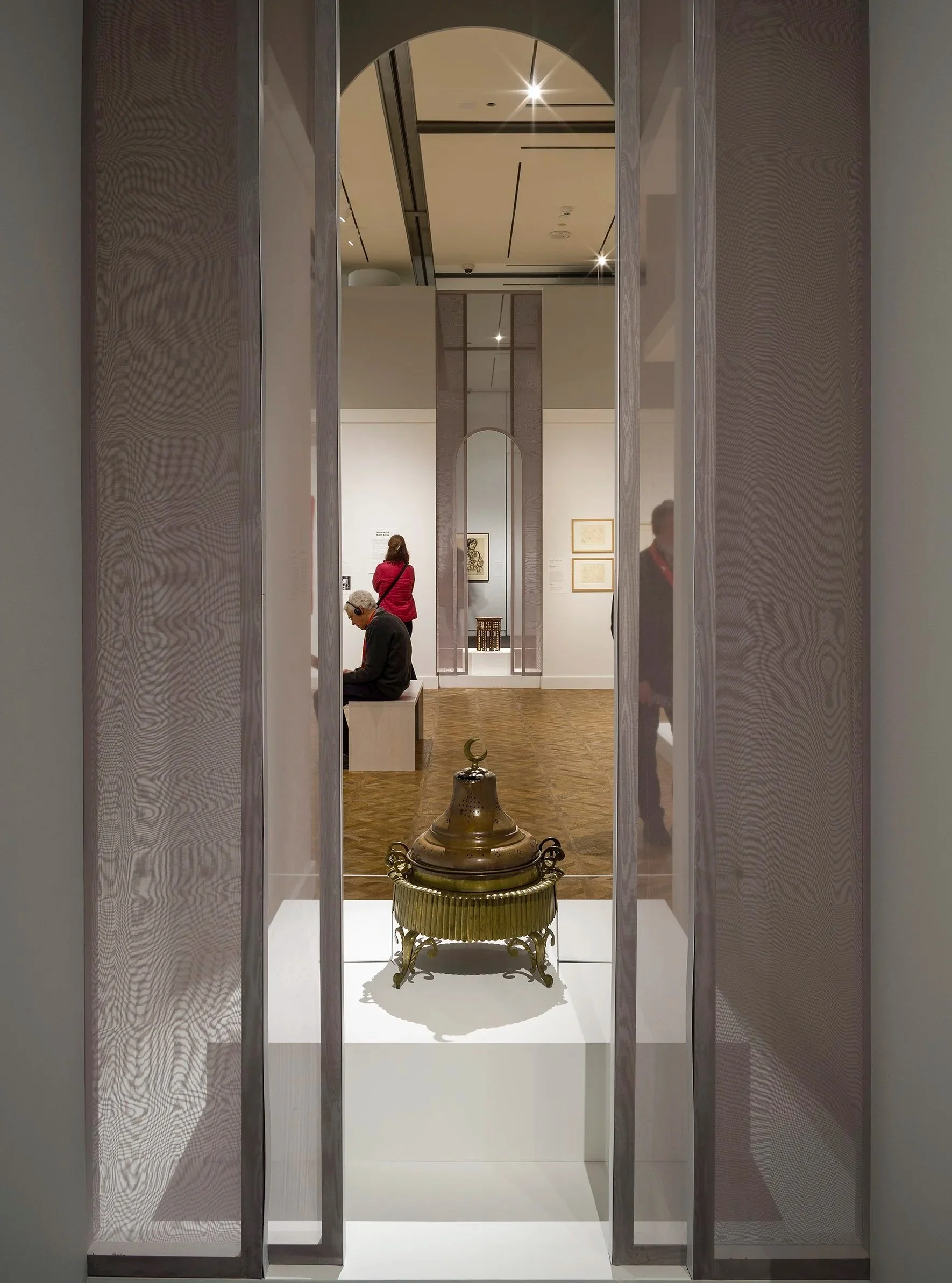
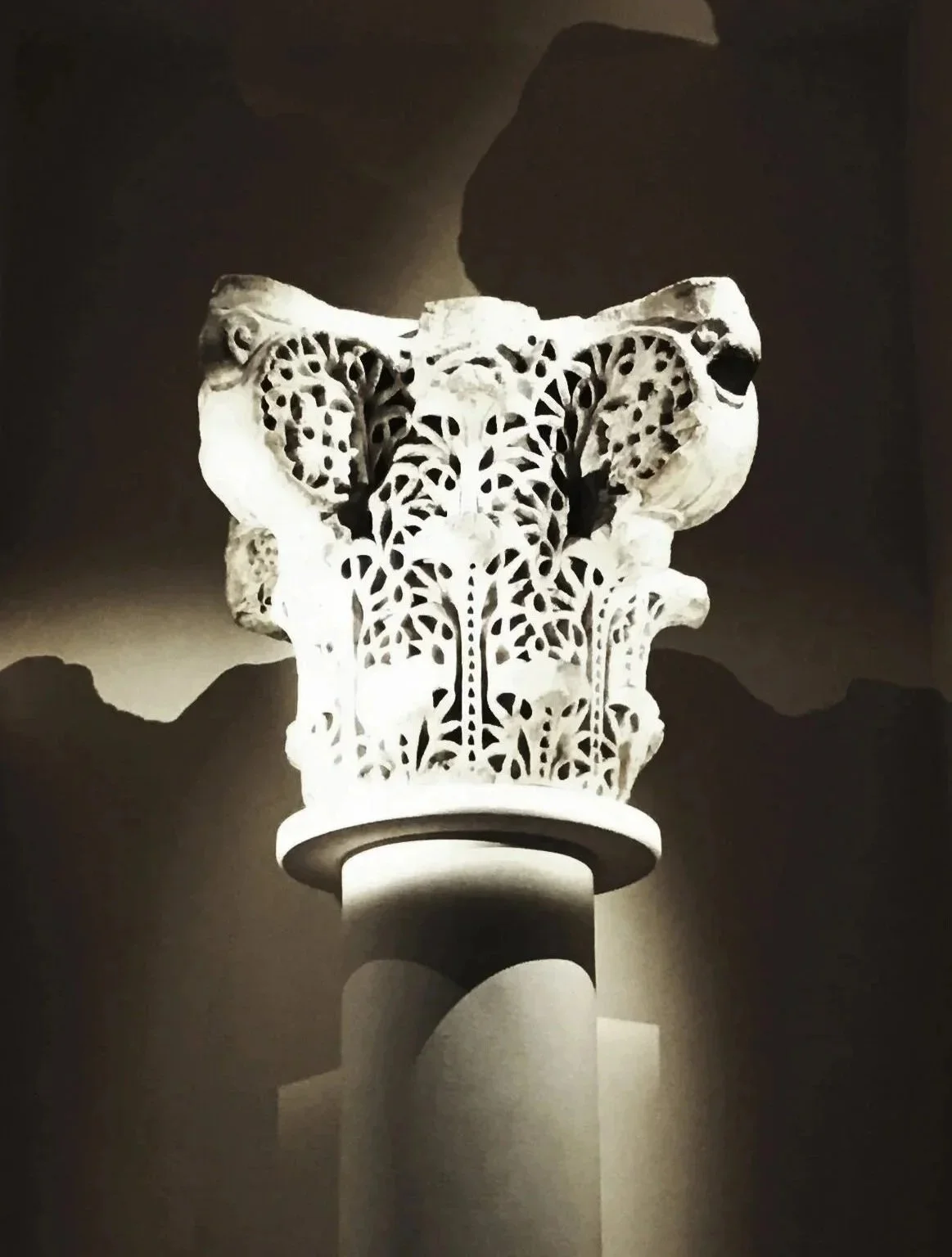
The MFA’s Arts of Islamic Cultures Gallery is designed to expand how visitors see and understand the diverse arts of Islamic cultures. Its thematic installation—developed through an intensive eight-year process of engagement with Islamic, artistic, and scholarly communities—is divided into distinct spaces that reflect the richness of these artistic traditions. Some sections explore art forms that are integral to all Islamic cultures, like Arabic calligraphy, while others focus on unique visual traditions such as that of Ottoman Turkey or Mughal India. Still other sections delve deeply into the history of singular objects in the collection, for example a remarkable door assembled from fragments of medieval Egyptian woodwork for the first American World’s Fair.
Curator: Laura Weinstein
Graphic Designer: Nick Pioggia
Museum of Fine Arts, Boston, 2019
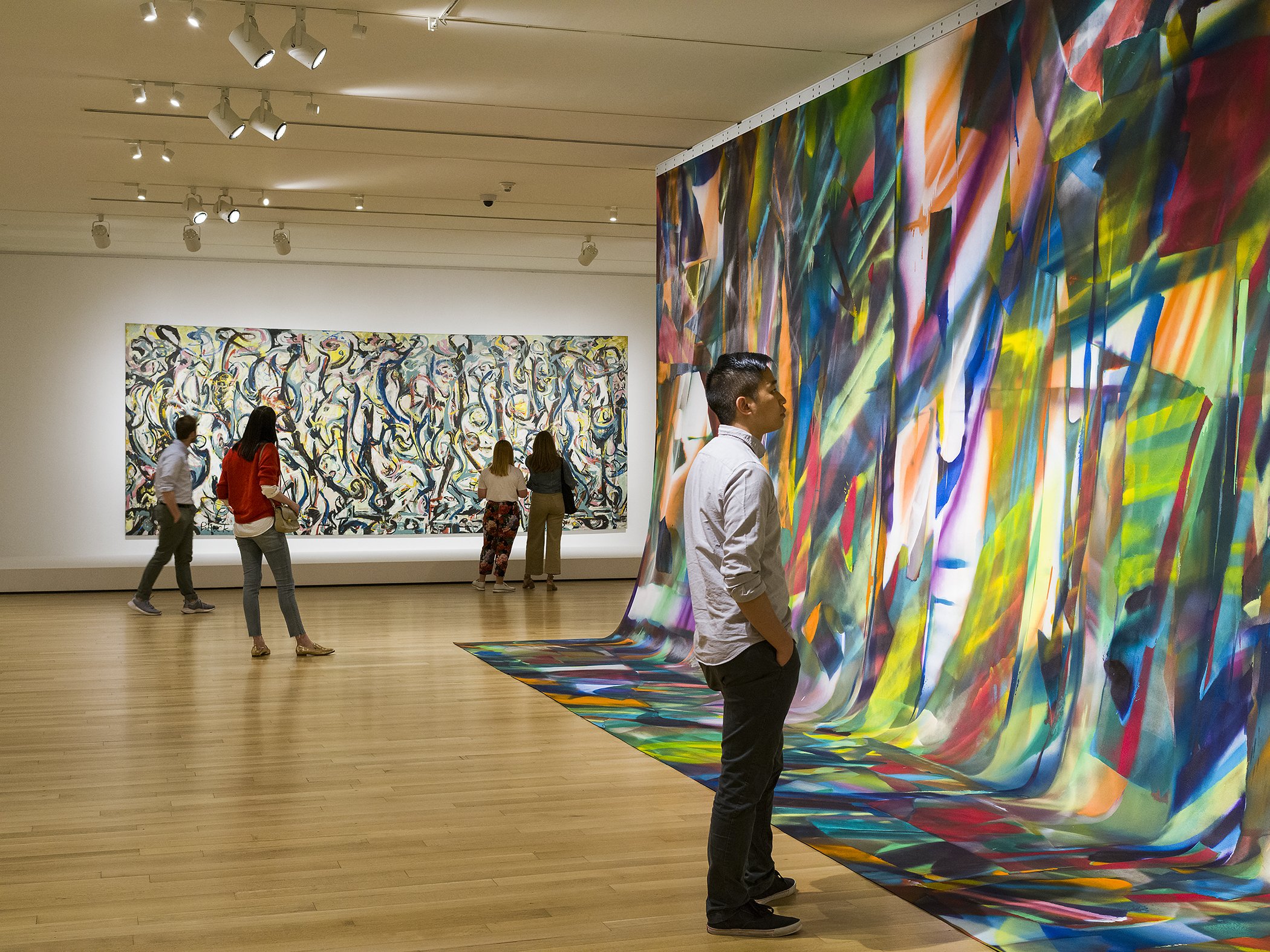
Stretching nearly twenty feet wide by eight feet high, Mural (1943) is the largest painting Jackson Pollock (1912–1956) ever made, and it proved a breakthrough for the artist. Across the painting’s dense and vibrant surface, Pollock’s bold brushstrokes appear to dance rhythmically. Today, Mural is recognized as one of the pivotal achievements of Pollock’s career, the moment when he left figuration behind, expanded the scale of his work, and started to develop his signature drip technique. “I took one look at it,” the critic Clement Greenberg later said, “and I knew Jackson was the greatest painter this country had produced.”
At the MFA, Mural was presented alongside a newly commissioned work by German painter Katharina Grosse (b. 1961). Known for her large-scale site-related installations, Grosse is one of the most important painters of her generation. Since the late 1990s, she has used an industrial paint-sprayer to apply prismatic swaths of color to a variety of surfaces, eroding the distinction between two and three dimensions to create immersive visual experiences.
The unprecedented pairing of Pollock and Grosse’s work demonstrated how the artists have each transformed painting through their innovative techniques and approaches to color on a massive scale.
Curator: Akili Tommasino
Graphic designer: Nick Pioggia
Museum of Fine Arts, Boston, 2018
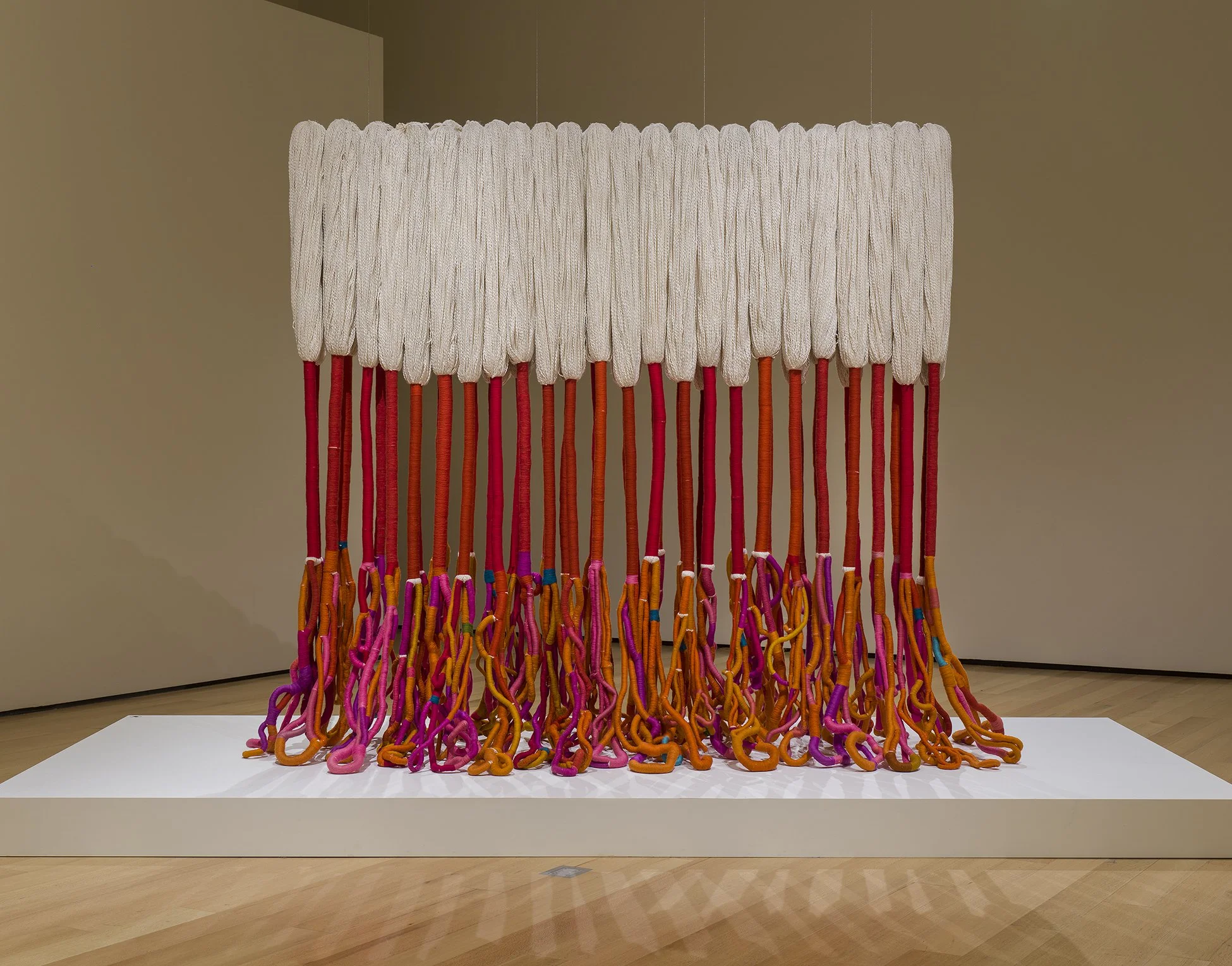
“Disappeared Quipu” pairs five ancient quipus on loan from the Peabody Museum of Archaeology and Ethnology at Harvard University with a newly commissioned, site-specific installation by Vicuña that combines monumental strands of knotted wool with a four-channel video projection. Together, these quipus of the past and present explore the nature of language and memory, the resilience of native people in the face of colonial repression, and Vicuña’s own experiences living in exile from her native Chile.
Museum of Fine Arts, Boston, Opened 2021
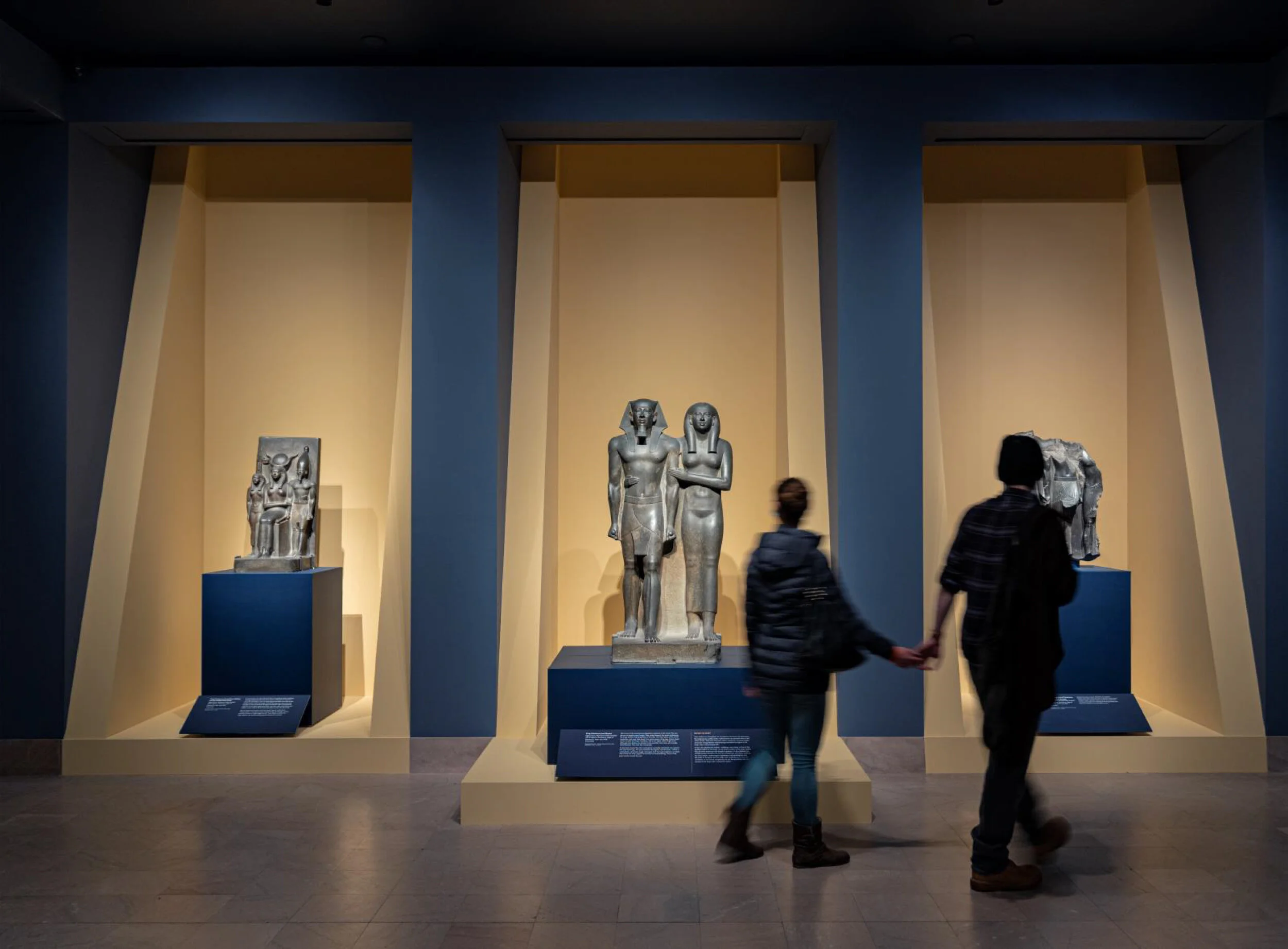
“Masterpieces of Egyptian Sculpture from the Pyramid Age” tells the story of this artistic moment and the culture that shaped it through some of the singular landmarks of the Old Kingdom (2575–2150 BCE). The bust of Prince Ankhhaf, the man who oversaw the completion of the Great Pyramid, is the most convincing example of realistic portraiture to survive from the Old Kingdom. The pair statue of King Menkaura and queen is one of the most famous Egyptian sculptures in the world. These and every other work on display—all of them undisputed masterpieces—have been in the MFA’s collection since the first part of the 20th century, when they were excavated in Egypt by the Harvard University–Boston Museum of Fine Arts Expedition.
The adjacent gallery, “Faces of Ancient Egypt,” illustrates the breadth of approaches sculptors took in creating distinctive likeness over 2,000 years of Egyptian artistic development. From the Twelfth Dynasty and the Late Period, respectively, the Josephson and Boston Green Heads are sensitive portrayals of a nobleman and a priest with startlingly realistic features. Meanwhile, a portrait of Pharaoh Amenhotep III from the Eighteenth Dynasty smiles broadly without a single crease in its cheeks, making it more of an elegant mask than a lifelike depiction.
Curator: Lawrence Berman
Graphic Designer: Nick Pioggia
Museum of Fine Arts, Boston, 2014
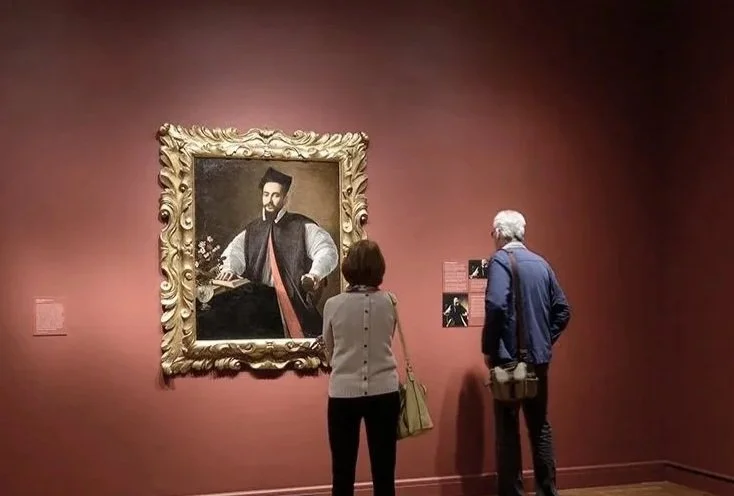
“Visiting Masterpieces: Caravaggio and Connoisseurship” introduces visitors to the art of judging whether a Caravaggio is, in fact, a Caravaggio. Four works never before seen in Boston provide an inside look at the complexities of connoisseurship and attribution. Caravaggio’s Fortune Teller (about 1594–95) and Fra Antonio Martelli, Knight Grand Cross of the Order of Malta (about 1608), once doubted by experts, are now considered benchmark works by this artist. Two more paintings—Maffeo Barberini (about 1596) and Saint Francis in Meditation (about 1595)—are at the center of ongoing debates.
Curator: Frederick Ilchman
Graphic designer: Nick Pioggia
Museum of Fine Arts, Boston, 2018
Rineke Dijkstra
Rineke Dijkstra (Dutch, b. 1959) is known for her intimate photographs that capture subjects in moments of change and transition. Subtle, yet revealing poses and a sense of vulnerability are hallmarks of her portraiture. This presentation brought together seven full-length portraits from the Park series, for which Dijkstra photographed children in major urban parks around the globe in dialogue with the captivating video portrait Marianna (The Fairy Doll) from 2014.
Nan Goldin
Nan Goldin (American, b. 1953) documents and celebrates the lives of many different people through intimate and direct portraits. Drawing on the permanent collection, this room-sized exhibition spanned a range of years and places, including the 1970s in Boston, where Goldin emerged as an artist, and her years in 1980s New York City, where she immersed herself in urban subcultures. Out of her lived experience, Goldin captures stories of love, friendship, and the lost moments of her social circles.
Sheila Hicks
Throughout her six-decade career, Sheila Hicks (American, b. 1934) has explored the possibilities of textiles as an art form. In this focused exhibition, the artist’s use of scale was illuminated through two large works, Kneeling Stones (about 1990) and Bamian (1968). Color is central to Hicks’s work, and she uses it as a language as she builds, weaves, and wraps to create installations that are intimate and immense at the same time. Combining ideas drawn from Josef and Anni Albers’s theories on color and design with ancient South American weaving techniques, Hicks has become internationally known for dissolving boundaries between artistic practices.
Curator: Reto Thuring
Graphic designer: Nick Pioggia
Museum of Fine Arts, Boston, 2018
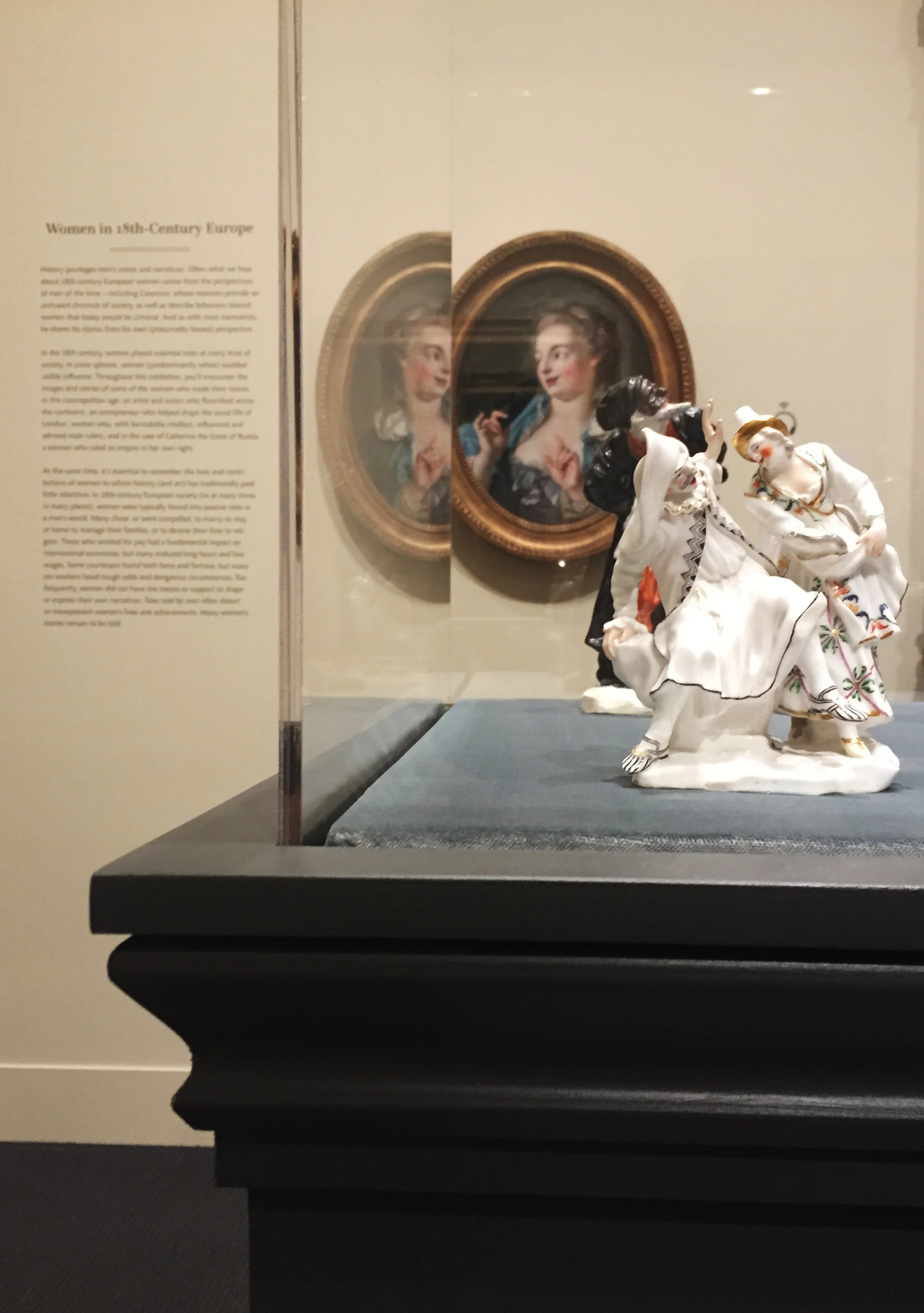
“Casanova’s Europe” reveals a refined and visually seductive culture on the cusp of modernity—one characterized by pleasure seeking, movement across boundaries, and self-invention. By using his life as the basis for the exhibition, the MFA invites visitors to consider aspects of power—political, social, economic, sexual—both in Casanova’s time and today.
Three tableaux - Venice, Paris, and London - and a variety of vignettes transport the visitor to the rich interiors of Casanova’s time. They provide the fully fleshed-out setting of the art work on display while underscoring the theatricality of a life lived unconditionally.
Curator: Frederick Ilchman
Graphic Designer: Eben Haines
Museum of Fine Arts, Boston, 2014
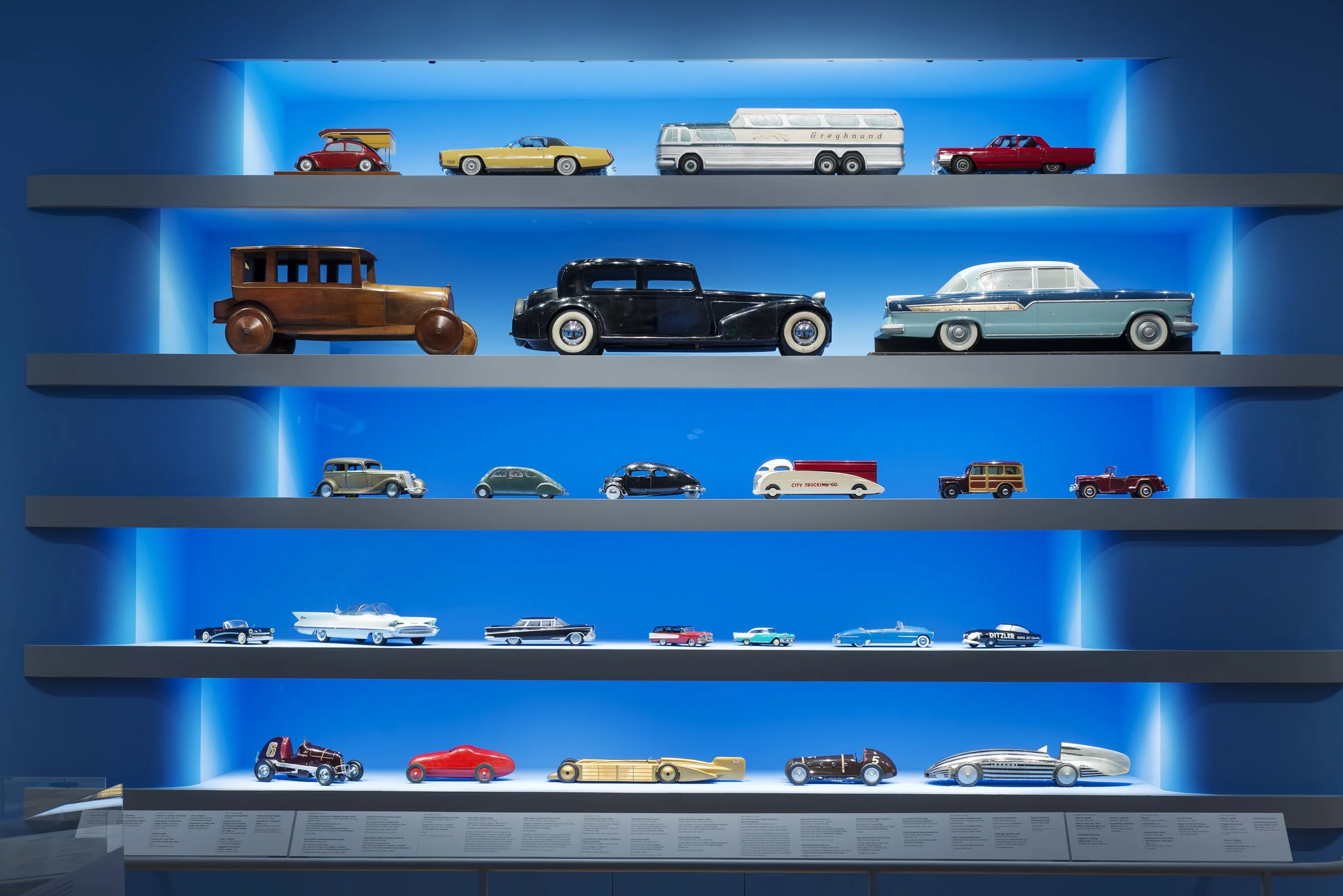
For decades, MFA visitors who read the small print have been familiar with the names of Jean and Fred Sharf. “Gift of Jean S. and Frederic A. Sharf” has appeared at the bottom of hundreds upon hundreds of the labels next to artworks in our galleries. One theme does run through the Sharfs’ collection: transportation. Fred, whose energy was legendary and who was always on the move, had forever been fascinated by the great speeding up of life that occurred in the middle decades of the 20th century. Planes, trains, and, most of all, automobiles, appear over and over again in the collection, as Fred had sought to capture the excitement that accompanied the simple act of getting from one place to another at mid-century.
The exhibit tries to capture both the speed lines and stylized curves of the early to mid-century, but also the wonder and boyish fascination of such a collection.
Curator: Meghan Melvin, Nonie Gadsden, Ben Weiss
Graphic Designer: Nick Pioggia
Museum of Fine Arts, Boston, 2016
William Merritt Chase was a brilliant observer, an innovative painter, and a leader in international art circles at the turn of the last century. The first complete examination of the artist in more than three decades, “William Merritt Chase” brought together 80 of the painter’s finest works in both oil and pastel, drawn from public and private collections across the US.
Curator: Erica Hirshler
Graphic Designer: Jennifer Liston Munson
Museum of Fine Arts, Boston, 2016
Two parallel installations presented key works and recent acquisitions from the MFA’s contemporary collection. “Political Intent” explores how artists creatively visualize social issues to generate awareness, discourse, or action. This selection of contemporary artists was paired with historical works that open dialogues around the role of women in political imagery across centuries.
“Beyond Limits” features abstract works that extend beyond traditional edges—stretching imagery, materials, and metaphors. Whether optically or physically, works on view activate the surrounding space.
Curator: Jen Mergel
Graphic designer: Nick Pioggia
Museum of Fine Arts, Boston, Opened 2019
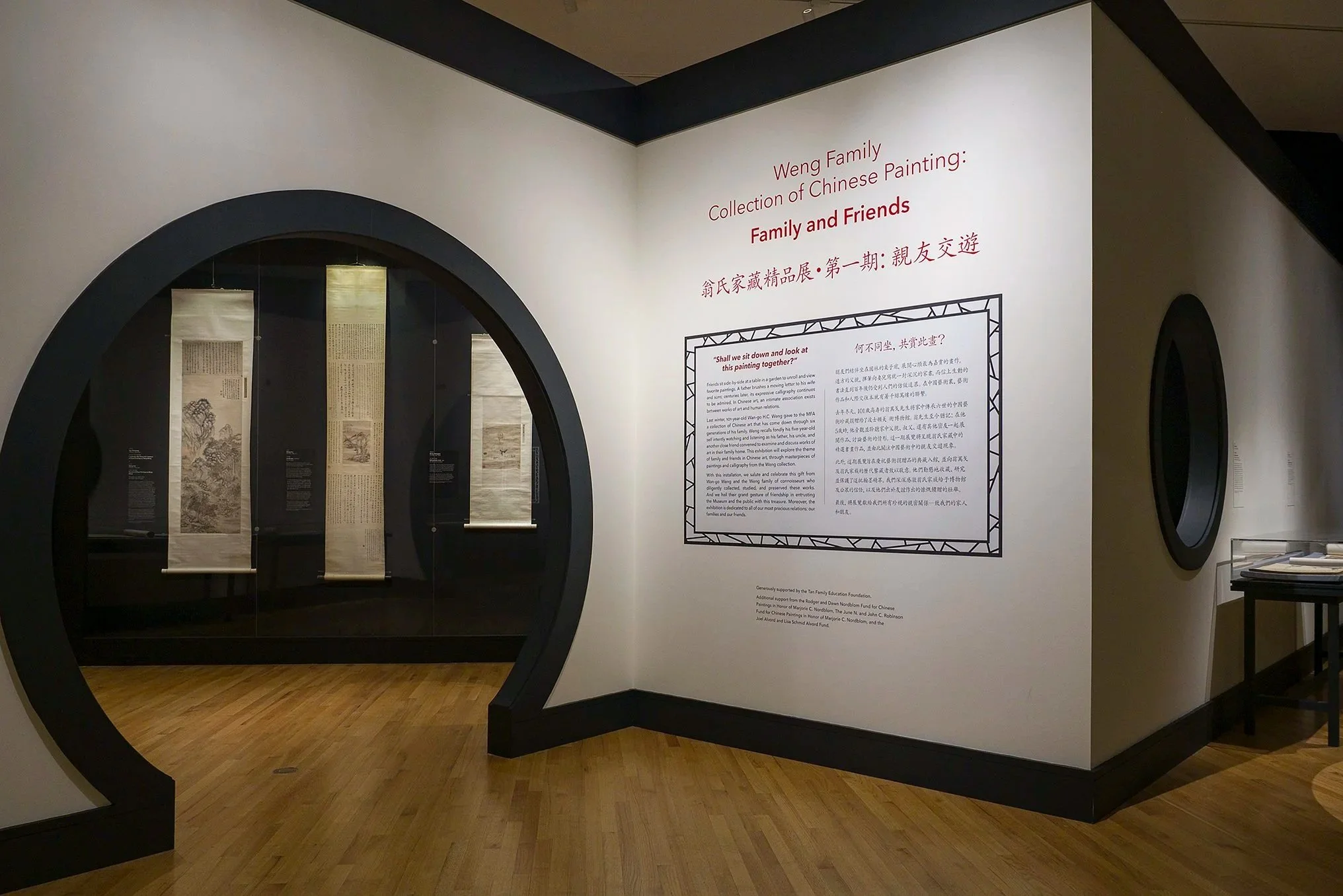
In 2018, Weng made the largest gift of Chinese paintings and calligraphy to the MFA in the institution’s history, comprising 183 objects that were acquired and passed down through six generations of his family. This exhibition features approximately 20 works from the gift that relate to concepts of family and friends.
“Weng Family Collection of Chinese Painting: Family and Friends” includes paintings and calligraphy by some of the greatest masters from the Ming (1368–1644) and Qing (1644–1911) dynasties. The intimate Suzhou Sceneries (1484–1504) album describes Shen Zhou’s travels with friends around his home regions. The calligraphy in Nine Letters to Home (1523), written by Wen Zhengming to his wife and sons, displays a spontaneity of style rarely found in the artist’s more formal works. The most recent piece in the exhibition is a handscroll painted by Wan-go H. C. Weng himself, Elegant Gathering at the Laixiju Studio (1990). The contemporary work commemorates a momentous gathering of friends—including six esteemed historians of Chinese paintings—held at the collector’s home in 1985.
Curator: Nancy Berliner
Graphic Designer: Eben Haines